Design with people and agents on the same team.
How I lead an engagement
I run engagements the same way every time: frame the problem, get evidence, place a bet, test it cheap, ship in thin slices, and learn. What changed is who does the legwork. AI agents now handle a lot of it, and my job is to decide where they help, where they don't, and who signs off.
The 60-second version
Frame before you design. Most projects start with a vague brief. I turn it into a bet with a number on it.
Evidence before opinions. Research, journey maps and personas decide what we make. Taste decides how it looks.
Designers build the first pass. Working code in week six beats a perfect file in week ten. Developers then pair with us and make it real.
Agents do the legwork, people own the calls.
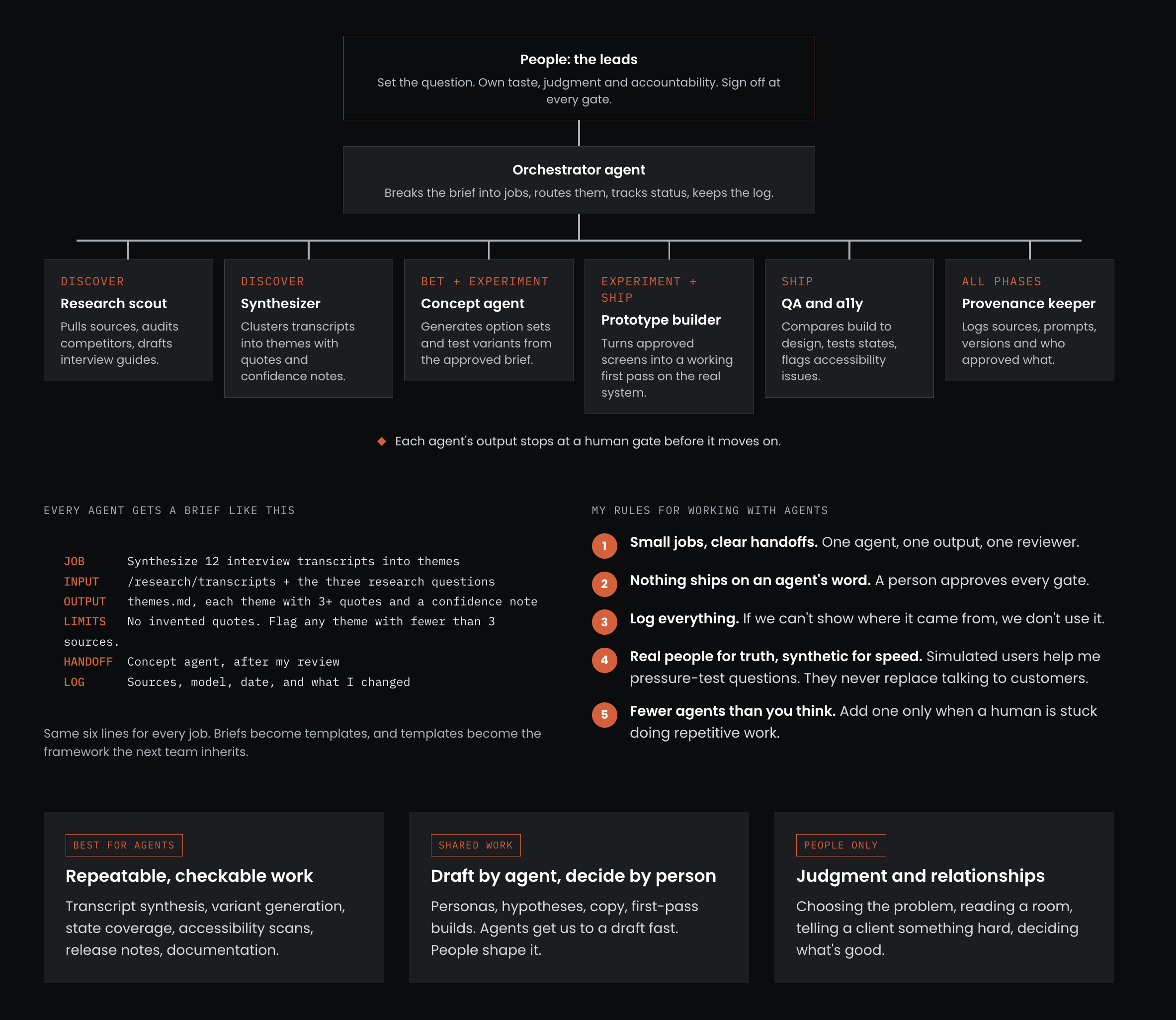
I orchestrate research, synthesis, variants, QA and logging. Every step has a human gate.
Make it repeatable. Every engagement leaves behind a framework, a checklist and a system the next team can pick up.
40%
faster from concept to prototype
30%
less rework between rounds
40%
less production time on core deliverables with AI in the workflow
2 weeks → 3 days
to onboard a new designer, using templates, playbooks and AI-assisted workflows
Five beliefs I bring to every engagement.
What I believe
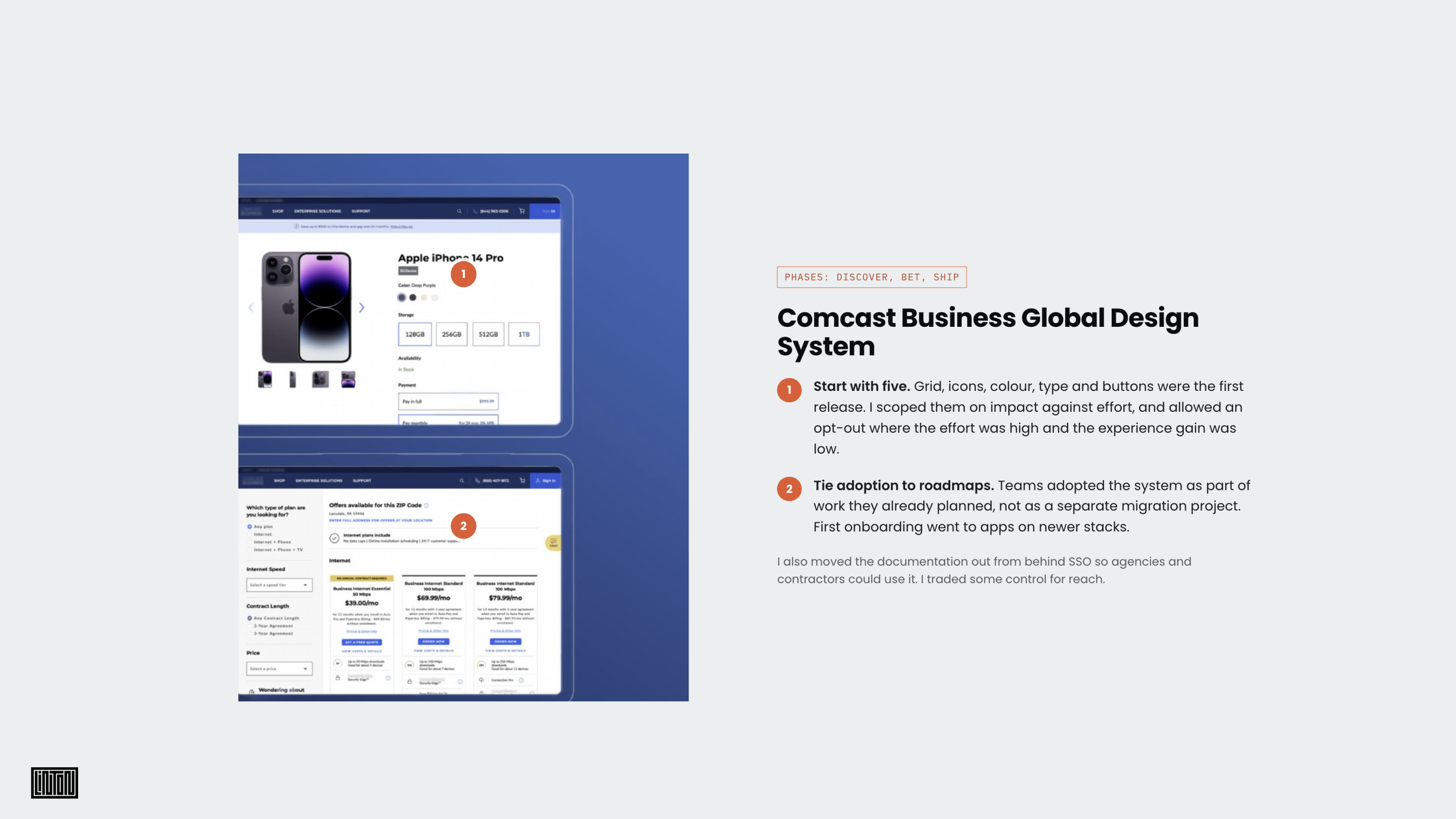
From Comcast Business
Adoption is the job.
A design system for 35+ applications. Building the components was the easy part. Getting ten design teams and ten dev teams to use them was the work. A system nobody adopts is just a tidy opinion.
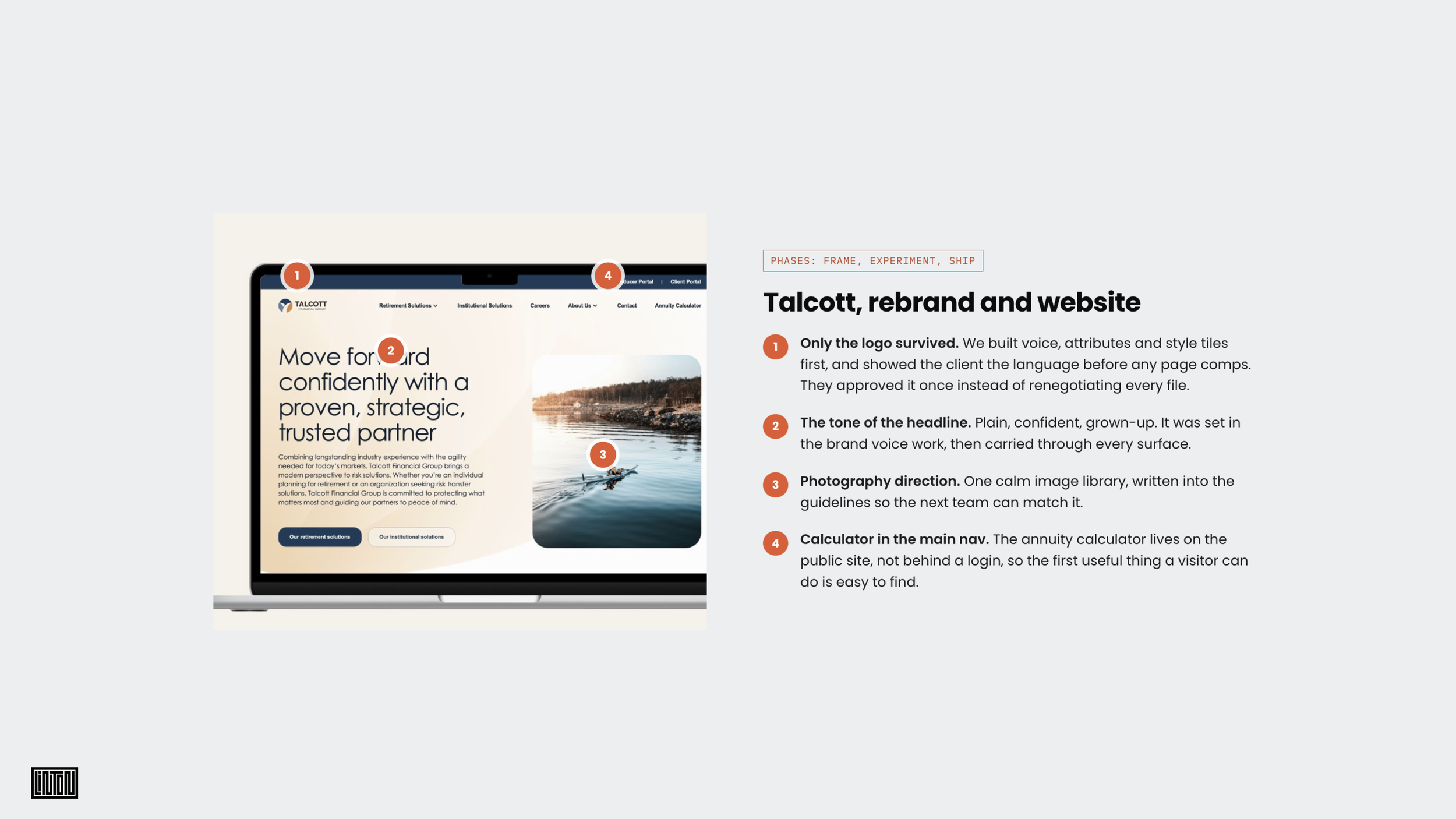
If it can't survive legal, it isn't a brand.
We kept the logo and rebuilt everything else, including the legal forms. Treating forms as a brand surface meant the brand reached the documents customers actually sign.
From Talcott
One system, many audiences.
Four audiences, four sets of rules, one brand. The design system is what stops that turning into four websites.
From Apollo
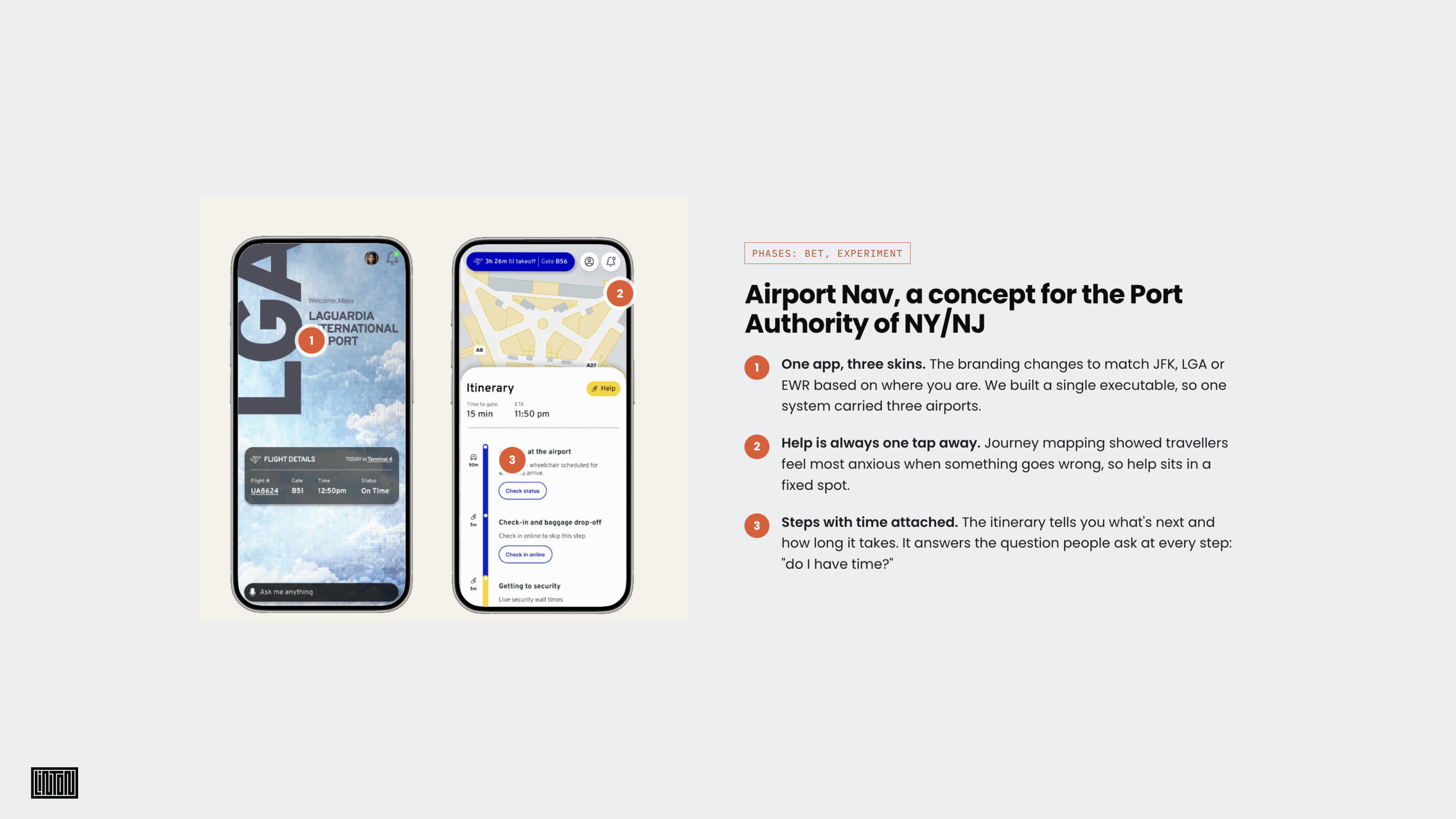
From Port Authority NY/NJ
Build once, adapt to context.
One app that re-skins itself for JFK, LGA or EWR depending on where you stand. Good systems flex without breaking.
Design the month before the product.
We stopped designing a bank account and started designing what happens before it. Start with the person's job, then work back to the screens.
From Compass
Trust is a design material.
In regulated work, speed only counts if people can see what the AI did, who checked it and where it came from. I build that visibility in from day one.
From my AI work
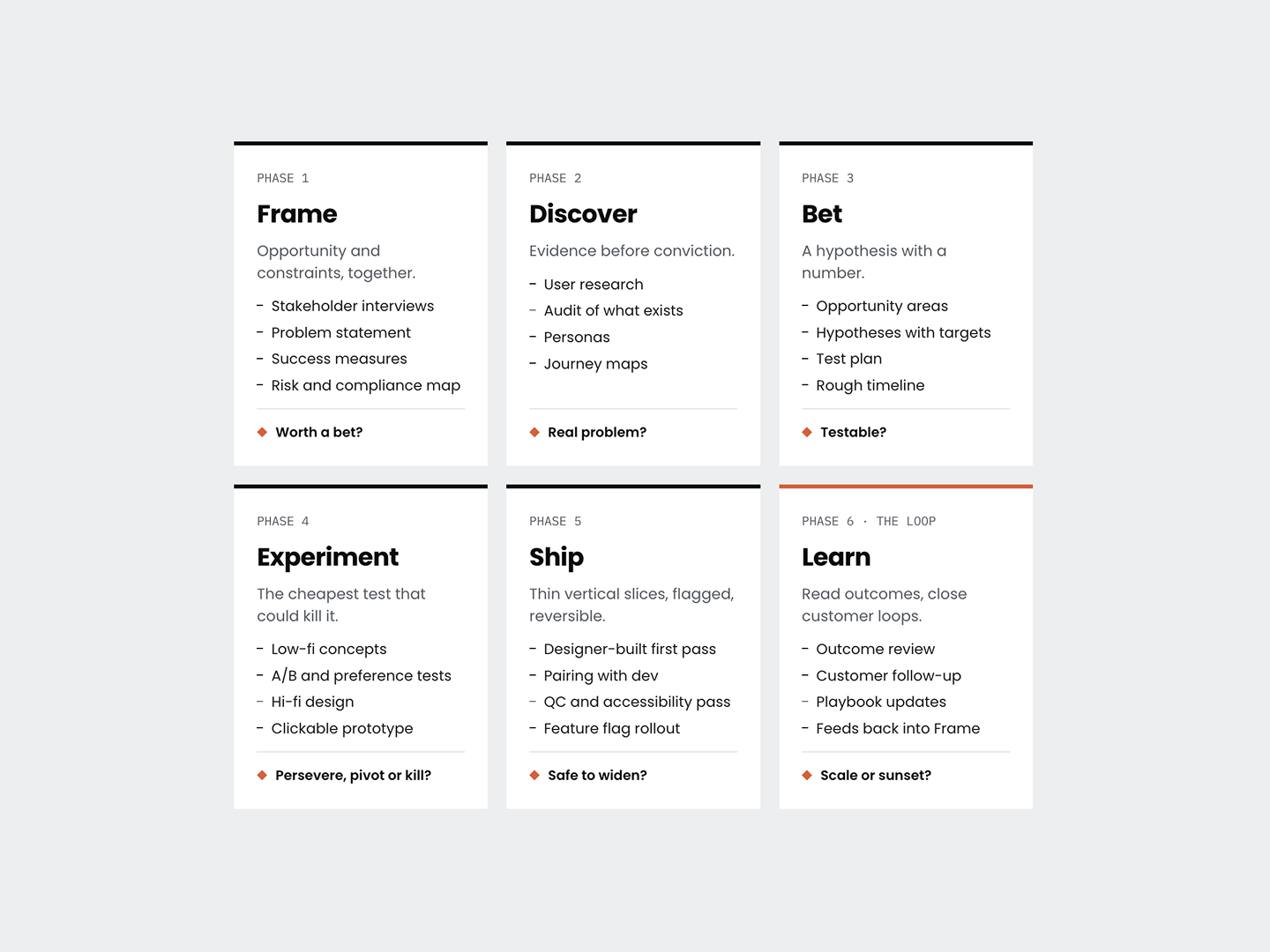
Six phases. Five gates. One loop.
The engagement, start to finish
Each phase ends in a question someone has to answer yes or no. That keeps the work honest and keeps us moving. Legal, risk and compliance sit in the room from the first week so the hard questions get solved early instead of showing up at the finish line.
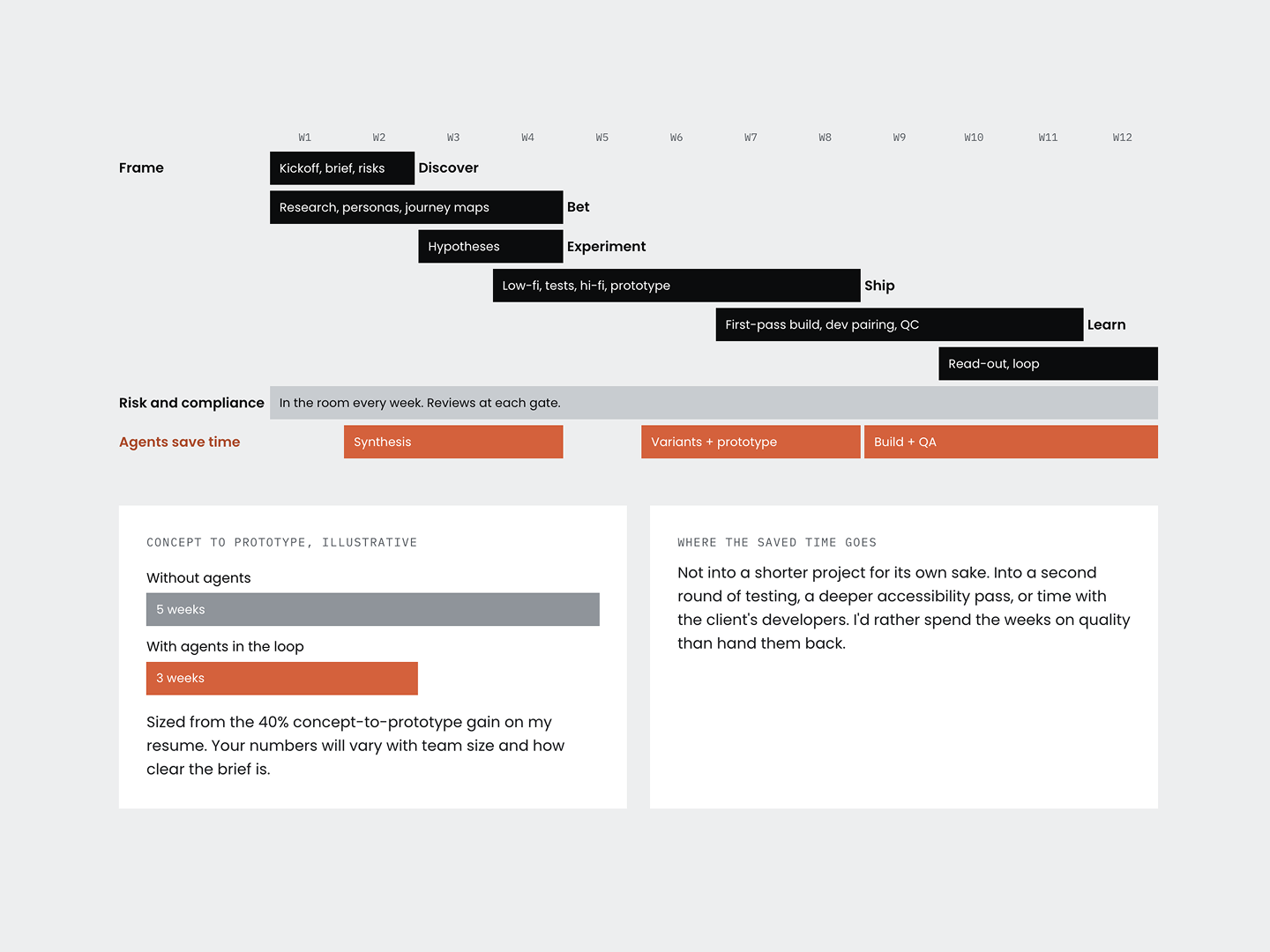
What the calendar looks like.
A sample 12-week engagement
Phases overlap on purpose. Research is still landing while we bet. Build starts before the last test closes. This is the shape I plan to. Real engagements flex it, and the orange bars show where agents buy back time.
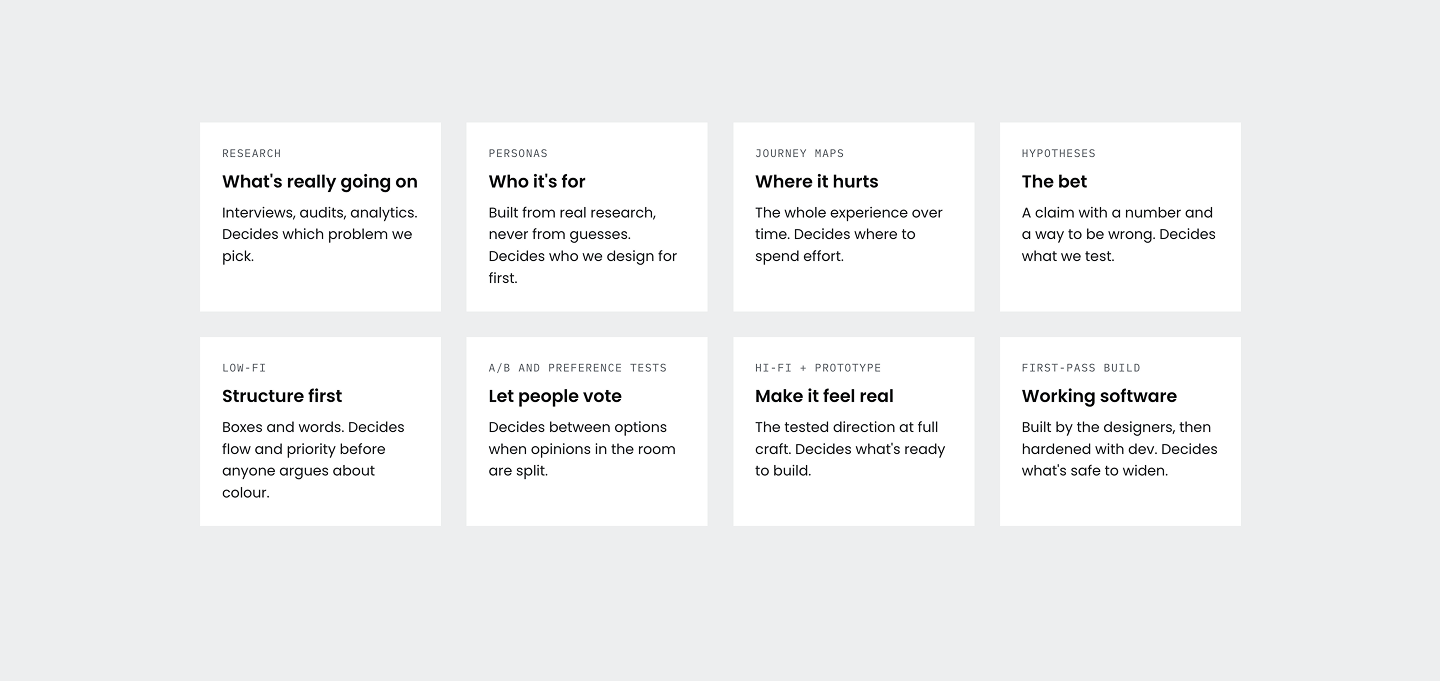
The data decides. The design follows.
Deliverables that feed each other
Every artifact answers a question the next one needs. If a deliverable doesn't change a decision, we don't make it.
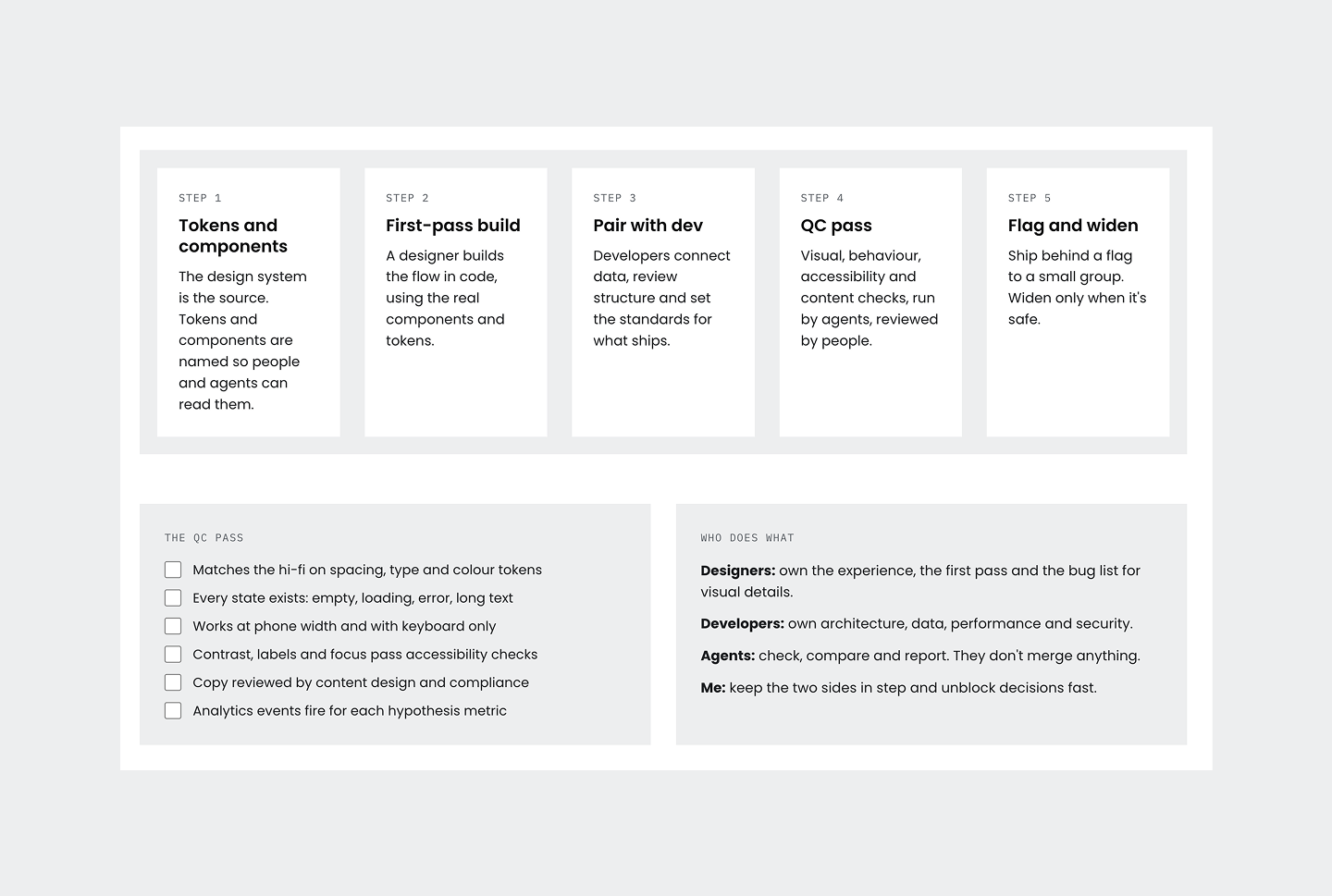
Designers build the first pass. Developers make it real.
Design to dev
Handoff is a slow, lossy way to share work. I'd rather have designers ship a working first version with AI-assisted tools, then pair with developers to connect it to real data, harden it and test it. Developers spend their time on the hard parts. Designers see their intent reach the screen.
Where you can see it.
The process in my own work
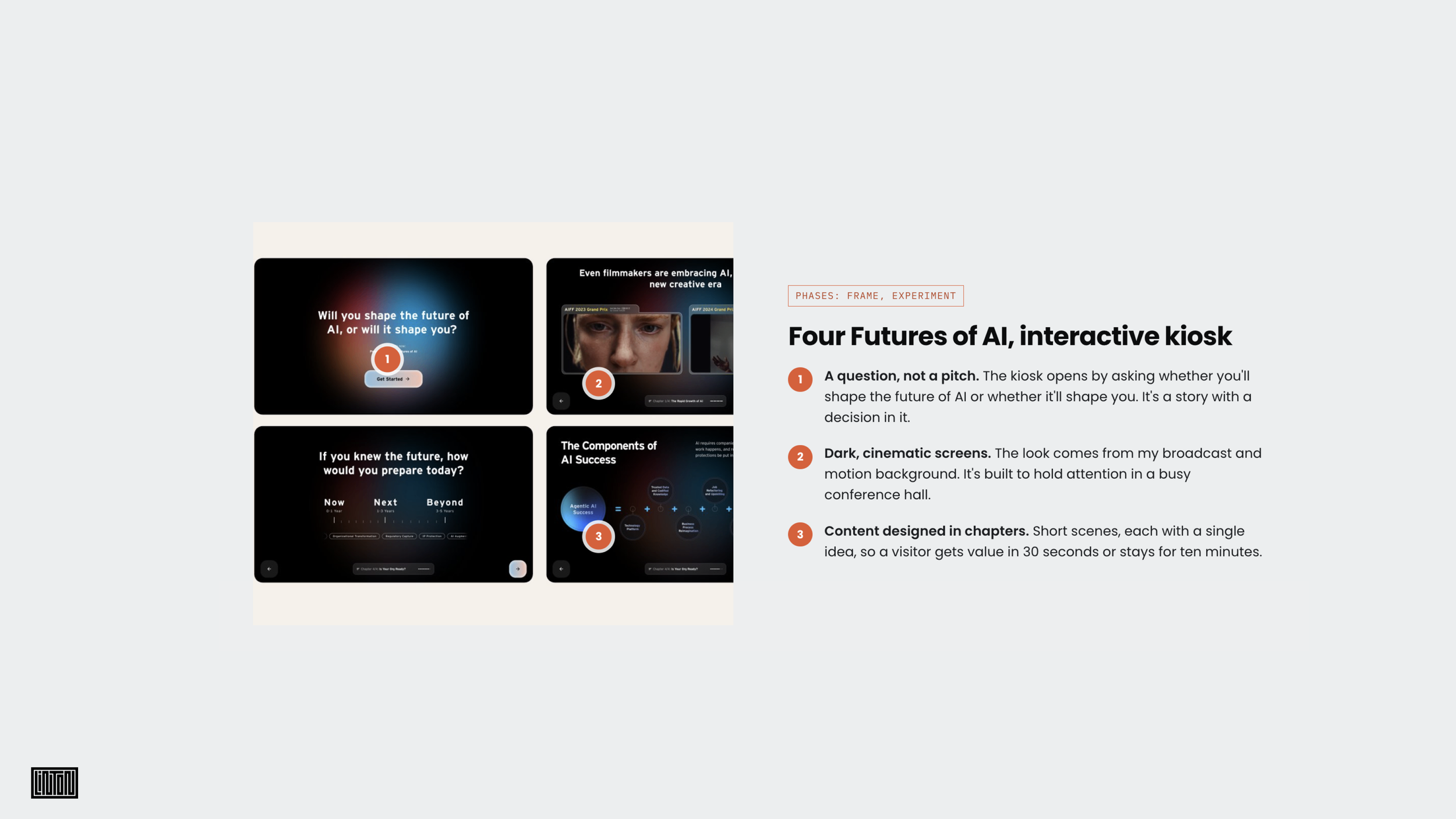
Real projects from my portfolio, marked up with the decisions behind them. Client names appear only where the work is public.
How I run a team that includes agents.
Orchestrating AI
I think of an engagement as a small crew of people with a fleet of specialist agents behind them. I don't hand an agent the whole job. I give each one a small, clear one, with a brief, a format for the answer and a person who signs off.